
Med Hondo: A founding father of African cinema
Al Jazeera documentary explores Mauritanian great.

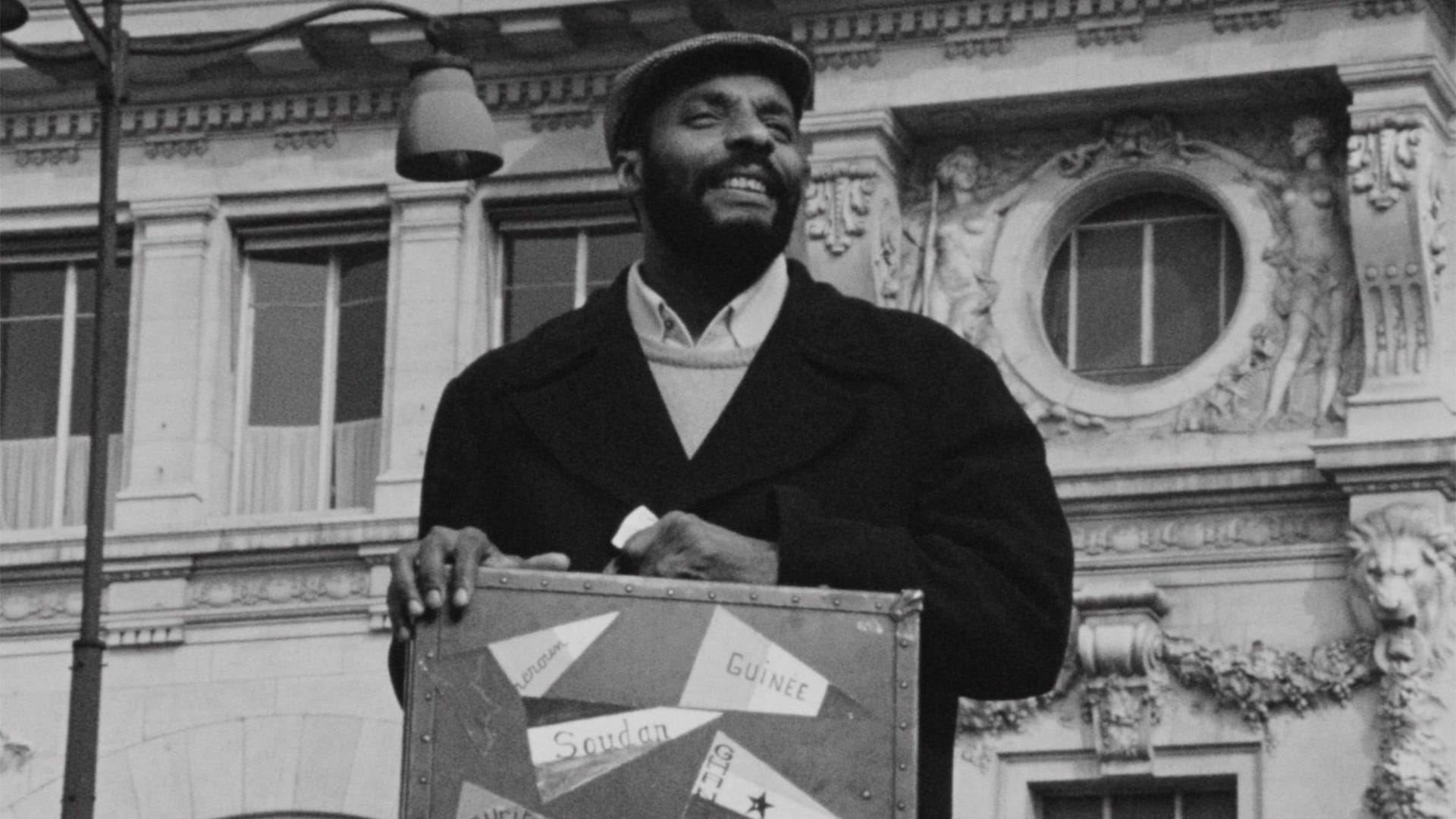
Robert Liensol in Soleil Ô (Oh Sun)
Synopsis
Med Hondo is best known to much of Europe for dubbing Eddie Murphy’s character, Donkey, into French in the Oscar-winning animated film Shrek. He also dubbed Rafiki in The Lion King, Dillon in Predator and Hallorann in The Shining.
The Al Jazeera documentary, Med Hondo: A founding father of African cinema, shifts the focus back onto his celebrated career as a director, which was partly funded by his dubbing work.
His debut feature, Soleil Ô (Oh Sun), about a Mauritanian who emigrates to Paris, won the top prize at Locarno in 1970 and screened at Berlin and Cannes Critics’ Week. It was briefly banned in France but now regularly appears in lists of the top 10 African films of all time, from the BFI to the Tarifa-Tangiers African Film Festival (FCAT)
Hondo does not pull his punches. The movie is not only a bitter firsthand analysis of economic migration but also a similarly cutting critique of systemic white supremacy. Half a century has scarcely blunted — and may have even enhanced — its relevance.
J. Hoberman, The New York Times, 2020
Nous aurons toute la mort pour dormir, his documentary on the Sahrawi independence movement in Western Sahara, won the Forum of New Cinema Prize at Berlin in 1977. His later films won the top awards at key African festivals like Carthage (Arabs and N*ggers, Your Neighbours) and FESPACO (Sarraounia).
All this after stowing away on a ship from Mauritania to France and facing police scrutiny in Marseille because he lacked legal papers.
Soleil Ô was the first film restored under the African Film Heritage Project, the initiative launched by Martin Scorsese's Film Foundation, UNESCO, FEPACI and Cineteca di Bologna to preserve African cinema. Hondo was actively involved in the restoration and lived to see Soleil Ô rediscovered by a new generation of critics after screenings at Cannes and London in 2017.
He passed away in 2019 and was buried in Morocco - framed in the documentary as a protest against his treatment in both Mauritania and France.
Mauritania | 2022 | 46 min
Did you know?
We featured this as the closing film for our #AfricaMonthFilmChallenge. The documentary of his life is a reminder that African films have been winning some of the world’s top prizes for over 50 years, but it’s also uncomfortable to see how little progress has been made structurally.
As the documentary shows, his cast worked for free on his first film and he had to mortgage his house to make his last film. Even when he could find funding, he struggled to find distributors to market his films. Mauritania, the country of his birth, didn’t screen his films in cinema while he was alive. As I write this, the only film of his I can watch legally in South Africa is Soleil Ô (Oh Sun), which I’ve belatedly discovered on Mubi. It’s now next on my watchlist.
It shouldn’t be this hard to find classic African films in Africa. That’s why this Substack and the Plot Twist Africa YouTube channel exist.
Read Hondo’s 1979 manifesto, What is cinema for us?. It still strikes a nerve. There is still much work to be done.
Want to watch & discuss with a friend?